
Revenue Collection System
Track collections by stream, payment channel, and operational performance.
Key Modules
Collections dashboards
Digital payments
Reconciliation
Arrears management
Finance officers need accurate, timely financial visibility. CountyERP connects collections, approvals, budgeting, and reporting into one operational finance environment.
Illustrative workflow
Fictional records for illustration. Confirm the workflow in your tailored demonstration.
Finance teams need to explain how bills, payments, adjustments and settlement contribute to a reported balance. Disconnected records make that review harder, particularly when a missing reference or correction crosses departmental responsibilities.
Scope a CountyERP demonstration around the records your finance team must review. Agree report definitions, approval responsibilities and any receiving-system requirements, then test a normal transaction and an exception against that scope.
Compare approved targets and collections by stream using a consistent period. Explain the difference between received, allocated and settled amounts.
Review account mappings, proposed exports and receiving-system acceptance. Confirm the reporting basis and interface responsibilities with the finance owner.
Identify the source schedules, definitions and review responsibilities needed for fiscal planning reports. Confirm current submission requirements separately.
Review authorized employee changes, payroll reconciliation and exception ownership with HR and finance. Define which controls are in the proposed scope.
Trace selected reported totals to their supporting records and approvals. Agree the evidence required by the responsible review team.
Review commitments, outstanding obligations and period cutoffs together. Identify who investigates differences and authorizes corrections.
CountyERP's finance-facing products combine revenue, controls, and statutory reporting into one connected environment.
Track collections by stream, payment channel, and operational performance.
Manage budgeting, approvals, expenditure control, and financial reporting.
Connect property-based billing and county assets to the broader revenue picture.
Maintain audit-ready files, supporting schedules, and approval records for finance workflows.
A cashier close needs the collection point, shift, channel totals, counted cash, variance and reviewing officer. Match the reporting cutoff before comparing figures.
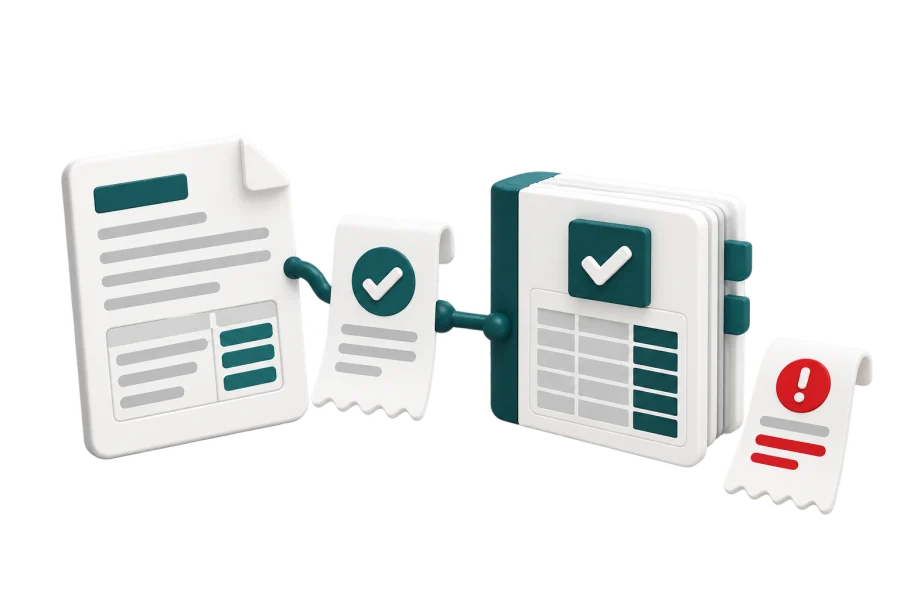
In a fictional shift, KES 12,500 of recorded cash and KES 12,000 counted cash leave a KES 500 shortage to investigate. Keep mobile-money receipts and bank settlement separate from the physical cash count.
Assign the variance or unmatched receipt to a responsible reviewer. Retain the receipt reference, amount, age, reason and supporting evidence. Escalate using the county’s agreed thresholds; do not clear an exception merely to balance the report.
Retain the report filters, supporting records and approval decision. A subsequent correction should remain traceable to the original item.
Review the analysis alongside your own collection baseline when defining revenue improvement priorities.
Read the overview and its sources before discussing revenue-system requirements with your finance and technical teams.
Model revenue recovery and procurement controls together to support the finance case for investment.
We can show how CountyERP helps finance officers manage collections, controls, and reporting more effectively.