

Involve clinical and finance teams together
A hospital system evaluation should include clinicians, nursing, pharmacy, finance, records and information-governance staff. Map the patient journey and identify who authorizes each step. Use anonymized examples and avoid putting patient data into a marketing enquiry form.
Define the facility’s priorities before choosing modules: registration quality, billing reconciliation, documentation completeness, stock visibility or management reporting. Each priority needs a baseline and an accountable owner.
Review claims as an end-to-end process
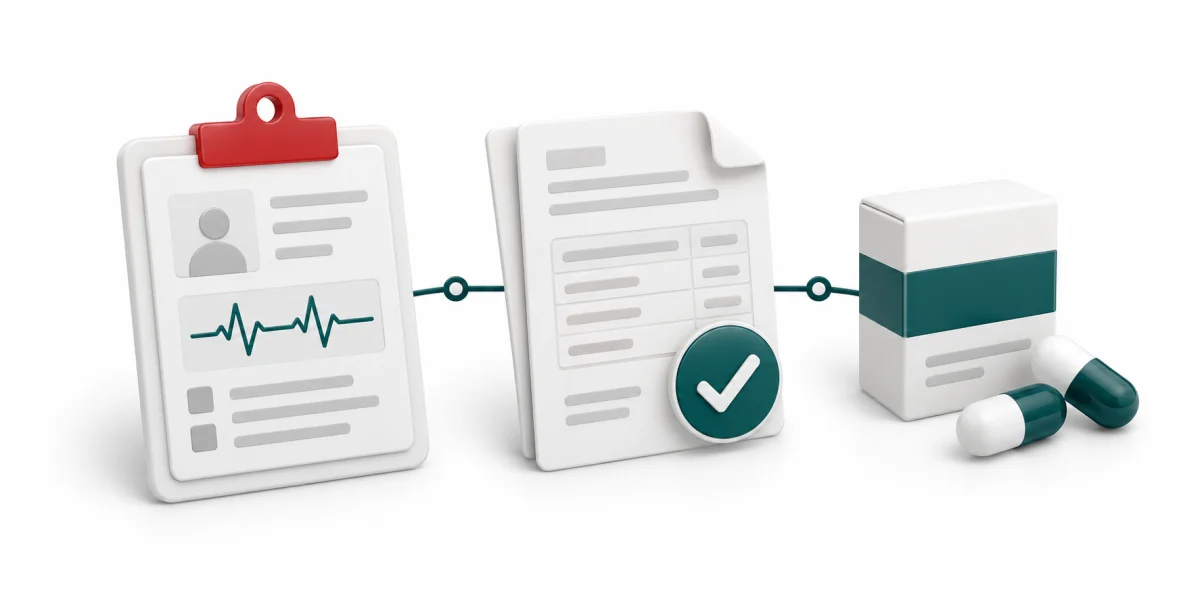
Ask how eligibility checks, supporting documentation, authorizations, submissions, rejections and payments are tracked. Trace one claim through each stage and show how a corrected claim relates to the original. Distinguish an internal billing record from a successful submission to an external payer.
The applicable SHA/DHA interface, permissions, testing and production onboarding must be confirmed for the deployment. DHA publishes eClaims conformance guidance, but a local development specification should not be assumed to be the final production contract. No software vendor can establish a claim-approval percentage without a defined and measured cohort.
Test stock and dispensing controls safely
Demonstrate prescription authorization, batch and expiry handling, dispensing, returns and adjustments. Reconcile system stock with a physical count and review who can approve corrections. Test an unavailable item and an authorized alternative through the facility’s clinical procedures.
Financial controls must not block emergency care. The facility should approve and test emergency access, deferred billing and escalation procedures with clinical leadership. A payment rule is not a substitute for a clinical decision.
Validate reports and privacy requirements
Choose representative reports and reconcile them to source records. Confirm current report definitions, coding requirements, DHIS2 transfer methods and who is responsible for submission. A dashboard screenshot does not establish the accuracy of national reporting.
Review access by role, audit review, retention, hosting, processor responsibilities and incident handling. Obtain the relevant agreements and deployment evidence rather than relying on an absolute compliance claim.
Agree downtime and implementation acceptance
Test the agreed workflow during a connection failure and show how records are recovered and reconciled afterward. Confirm which functions remain available, what staff record manually and who resolves conflicting records. Do not assume that every clinical workflow operates offline.
Set acceptance criteria around demonstrated tasks and measured errors, delays and exceptions. An implementation plan should include training, data migration, clinical sign-off and support escalation before live use. A CountyERP demo request can start with facility type, size and the workflows you want reviewed.
Define clinical and financial responsibilities
Use one synthetic encounter to agree where clinical documentation, charging and settlement meet. Confirm the proposed interfaces and downtime procedures with the facility.

Illustrative example using synthetic data; not a customer result or a statement of verified product behavior.
Clinical team: record the service
The clinical system records the service and its authorized completion. Finance needs a traceable charge reference, not unrestricted access to the entire clinical record.
Billing team: account for the charge
Link the encounter, service code, effective tariff and invoice. In a fictional KES 1,200 charge with KES 400 allocated, KES 800 remains outstanding. A submitted insurance claim is a separate review state, not proof that this balance has been paid.
Claims team: track external decisions
Track claim reference, submission date, response reason and claims officer. Keep submitted, queried, approved and paid states separate. Link resubmissions to the original claim and match payment evidence before treating an approved claim as settled.
Facility leadership: approve continuity
Agree emergency access, deferred charging and recovery checks with clinical leadership. A financial exception must have an escalation route that preserves appropriate care.
Sources and further reading
Editorial update 15 October 2026; sources last reviewed 10 October 2026. Confirm current instruments and deployment requirements with the responsible specialists.